
At Aspire Physio Bangkok, one of the most common patterns we see in our clinic involves clients struggling with a wide range of pain, from shoulder tightness and lower back stiffness to hip imbalances and even ankle instability. What surprises many of them is this: the root issue often isn’t where the pain shows up. Instead, it frequently starts at the centre of the body, the core.
When we talk about core dysfunction and chronic pain, we’re not referring only to the visible “six-pack” muscles. We’re referring to the deeper system of support that stabilises your spine, pelvis, and entire body during movement. A weak or poorly functioning core doesn’t just lead to back pain, it throws off your body’s mechanics from head to toe.
In this article, we’ll share what we’ve learned from years of clinical practice and client success stories about how your core is the foundation of full-body health, and how restoring it can help reduce or even resolve pain across multiple areas of the body.
What Is Core Dysfunction and How Does It Affect Your Entire Body?
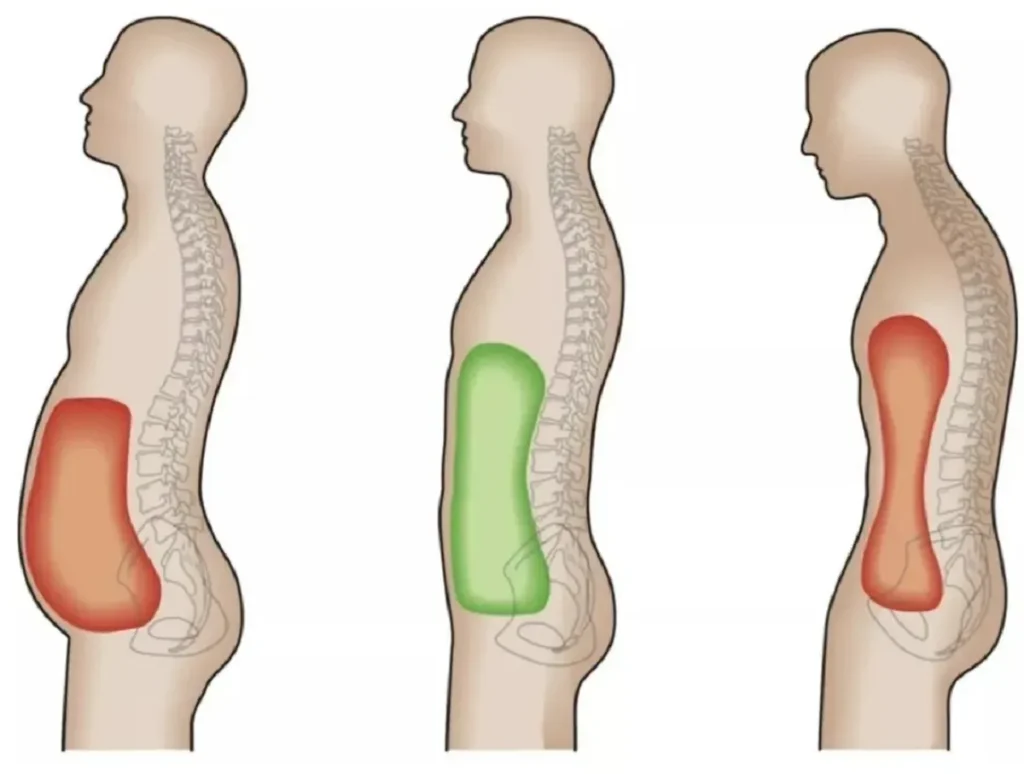
At Aspire Physio Bangkok, we define core dysfunction as the inability of your inner core system, made up of the diaphragm, pelvic floor, transverse abdominis, and deep spinal stabilisers, to engage and support your body in everyday movements.
When your core doesn’t do its job properly, your body starts compensating. Your hips might overwork, your shoulders may stiffen, or your knees could track poorly. Over time, this imbalance creates tension, inflammation, and wear-and-tear, leading to chronic pain that seems unrelated to your core at first glance.
For example:
- Shoulder pain might come from a misaligned rib cage or an unstable thoracic spine, both of which rely on core support.
- Lower back pain is often the most obvious symptom of core dysfunction, especially if the deep abdominal muscles and multifidus aren’t firing correctly.
- Hip tightness and glute weakness frequently develop when the pelvis is poorly stabilised.
- Knee pain may trace back to the way the core affects the alignment of the hips and legs during movement.
- Ankle instability often arises when the entire kinetic chain is off balance due to a lack of central control.
By identifying and addressing core dysfunction, we’ve been able to help many clients reduce chronic pain symptoms that they’ve carried for years.
How We Assess Core Dysfunction at Aspire Physio Bangkok
Our approach begins with a thorough assessment. We don’t just look at where you feel pain, we take the time to observe how your body moves as a whole.
Here are a few of the things we evaluate:
- Breathing mechanics: Shallow chest breathing is a common sign that the diaphragm isn’t functioning well, which affects core pressure and spinal stability.
- Pelvic alignment and control: An unstable pelvis can strain the hips and spine.
- Muscle activation patterns: We look for compensations where superficial muscles overwork while deeper muscles remain inactive.
- Balance and load distribution: Uneven pressure during standing or walking tells us about your body’s alignment and core engagement.
Every client is different, and we tailor our treatments based on what we observe in real time. Our goal is to identify the why behind the pain, not just the where.
Why Localised Pain Often Has a Central Origin
You may come in with shoulder pain, but through careful assessment, we often find that poor trunk rotation, weak abdominal control, or poor rib mobility is to blame. Similarly, clients with recurring ankle sprains may not realise that their pelvic instability is affecting their gait and balance.
Here’s an example from our clinic: one client came to us with chronic knee pain that flared up every time she ran. After examining her gait, we found that she had a subtle pelvic drop during each stride, caused by weak lateral core muscles and poor coordination. Once we began focusing on her core control, not just her knees, her pain dramatically decreased, and she was able to return to running pain-free.
It’s stories like these that reinforce what we teach every day: if we don’t address core dysfunction, chronic pain will keep coming back, no matter how much we stretch or strengthen the painful area.
Rebuilding Core Strength and Function: Our Step-by-Step Process
At Aspire Physio Bangkok, we take a structured approach to helping you rebuild a functional and resilient core:
- Awareness and Activation
We begin with breathing retraining, pelvic positioning, and basic core activations. These are often subtle movements, but they lay the foundation for more dynamic exercises later. - Integration into Functional Movement
Once the deep core muscles begin to fire correctly, we start integrating them into daily tasks, squats, lifting, reaching, so the new patterns carry over into real life. - Rebuilding Strength
With proper activation and movement quality established, we help you rebuild strength across the entire system. We emphasise safe loading, posture control, and joint alignment to ensure long-term results. - Addressing Surrounding Weak Links
Finally, we look at how your shoulders, hips, knees, and ankles are functioning. We reinforce strength and mobility around these joints to support the whole chain.
This isn’t a one-size-fits-all approach. We adjust your treatment based on how your body responds, your goals, and your history of injury or pain. But no matter where you’re starting from, we always come back to the centre, your core.
Common Myths About Core Training That We Help Dispel
We often meet clients who’ve done endless sit-ups or planks, yet still suffer from pain. That’s because not all core exercises are created equal. Here are a few myths we help clients move past:
- “If I do ab exercises, I’m training my core.”
Many traditional ab workouts only hit surface-level muscles and can reinforce poor patterns if done incorrectly. - “I have back pain, so I should avoid movement.”
In most cases, gentle, guided core activation helps reduce pain by providing more support to the spine. - “I can’t strengthen my core because I’m too old or injured.”
We’ve worked with clients of all ages and backgrounds, from post-surgical to postnatal, from sedentary to athletic. Everyone can benefit from reconnecting with their core.
At Aspire Physio Bangkok, we focus on the quality of movement, not just the quantity of repetitions. This shift in perspective is what helps our clients get results.
How to Know if You Might Have Core Dysfunction
Here are some signs that your core may not be functioning the way it should:
- You experience recurring pain in your back, hips, knees, or shoulders with no clear cause.
- You notice poor balance or frequent trips/stumbles.
- You feel tight in certain areas no matter how much you stretch.
- You fatigue quickly during workouts or basic movements.
- You’ve had a past abdominal surgery, pregnancy, or long-term sedentary habits.
Let’s Work Together to Break the Cycle of Chronic Pain
At Aspire Physio Bangkok, we believe that movement is medicine: but only when it’s built on a stable core. When we address core dysfunction and chronic pain at the source, our clients often experience:
- Lasting relief
- Better posture
- Improved athletic and everyday performance
Whether you’re managing a lingering injury, persistent pain, or new limitations, we’re here to help with a personalised plan that works for your body.
If any of these sound familiar, we encourage you to book a consultation with us. We’ll help you understand whether core dysfunction could be at the root of your symptoms.
Core Dysfunction and Chronic Pain Are Deeply Connected, But You’re Not Stuck with It
Chronic pain doesn’t have to be your new normal. By identifying and addressing core dysfunction and chronic pain at the same time, we’ve helped countless clients move, feel, and live better. The solution isn’t just about treating the symptoms, it’s about understanding how the body works as an integrated system.
If you’ve tried everything but still feel stuck, don’t give up. Let’s work together to rebuild your foundation, step by step.
Ready to get started?
Visit us at www.physiobangkok.com or call us to book your first consultation. We’d love to help you get back to pain-free living.