

Sports injuries can interrupt training, work, and everyday activities. Whether you have a sprained ankle, muscle strain, knee injury, tendon problem, or shoulder pain, proper injury recovery can help you return to activity safely. Physical therapy focuses on restoring movement, rebuilding strength, and helping you regain confidence in the injured area.
Recovery is not simply about waiting for pain to disappear. The goal is to restore how your body moves and functions so you can return to your sport without rushing the process or putting the same area at risk again.
Understand the Injury Before Starting Recovery
The first step in injury recovery is understanding what happened. Sports injuries can result from a sudden incident, such as a fall or awkward landing, or develop gradually from repeated stress.
Common sports injuries include:
- Ankle sprains
- Muscle strains and tears
- Knee injuries
- Tendon problems
- Shoulder injuries
- Ligament injuries
- Hip and groin pain
- Overuse injuries
- Stress-related bone injuries
The symptoms alone do not always tell you how serious an injury is. Pain, swelling, weakness, reduced movement, or a feeling that a joint is unstable may indicate that an assessment is needed.
A physical therapist can assess your movement, strength, flexibility, and the way the injured area responds to activity. Depending on the injury, further medical assessment or imaging may also be appropriate. A proper assessment helps determine what activities are safe and what needs to be addressed during rehabilitation.
Give the Injury Time to Settle
After an injury, many people make one of two mistakes. They either return to exercise too quickly or stop moving completely for too long.
In the early stage, your therapist may recommend reducing activities that increase pain or place stress on the injured area. The right level of activity depends on the type and severity of the injury.
However, complete rest is not always the answer. Once movement is considered safe, gradual activity can become an important part of recovery.
A physical therapist can help determine what movements you can perform safely at each stage. This may include gentle mobility exercises before progressing to strengthening and sport-specific activities.
The aim is to protect the injury without allowing unnecessary loss of strength, mobility, or fitness.
Start with Controlled Movement
Pain and swelling can cause people to avoid using an injured body part. While this may be appropriate early in some injuries, prolonged inactivity can make it harder to return to normal movement.
Physical therapy can introduce controlled movement based on your condition. Exercises may focus on restoring joint movement, improving flexibility, or helping you use the injured area correctly again.
The exercises should match your current ability. An exercise that is appropriate later in recovery may be too demanding during the first few days or weeks.
This is why rehabilitation should progress gradually rather than follow a fixed timeline.
Your physical therapist can adjust exercises according to changes in pain, movement, strength, and function. This creates a clearer path from basic movement to normal activity.
Rebuild Strength Gradually
Strength is an important part of injury recovery. When you stop training because of an injury, the muscles around the affected area may become weaker. This can make normal activities and sports movements more difficult when you begin again.
Start strength exercises at a level the injured area can handle. As your strength improves, you can gradually increase the resistance, repetitions, or difficulty.
For example, someone recovering from a knee injury may begin with simple exercises that require controlled movement. Later, the program may include squats, step-ups, lunges, or other movements that more closely match their sport.
The exact exercises depend on the injury, sport, fitness level, and recovery stage. No single exercise plan works for every athlete.
Progressive strengthening is also important because returning to sport requires more than moving without pain. The injured area needs to handle the demands of training and competition.
Work on Balance and Control
Strength is only one part of recovery. You also need to control your body during movement.
Balance and coordination exercises can be particularly useful after injuries involving the ankle, knee, hip, or other joints. These exercises help you regain control when standing, changing direction, landing, or moving from one position to another.
For athletes, this matters because sports rarely involve slow, predictable movements. Running, jumping, turning, stopping, and reacting to other players place different demands on the body.
Rehabilitation should eventually reflect those demands.
For example, an athlete recovering from an ankle injury may need to progress from basic balance exercises to single-leg movements and then to controlled jumping, running, or direction changes.
The progression should be based on ability rather than simply the number of weeks since the injury.
Follow Your Home Exercise Plan
Appointments with a physical therapist are only one part of rehabilitation. The work you do between appointments can also affect your progress.
Your therapist may provide exercises to complete at home. Perform these as instructed, rather than replacing them with exercises found online or copied from another athlete.
Consistency matters. However, more exercise is not always better. Doing too many repetitions, increasing resistance too quickly, or adding unrecommended activities can irritate the injury.
If an exercise causes a significant increase in pain, swelling, or other symptoms, tell your physical therapist. Your program may need adjustment.
A good rehabilitation plan should fit your current condition and provide clear instructions about what to do and what to avoid.
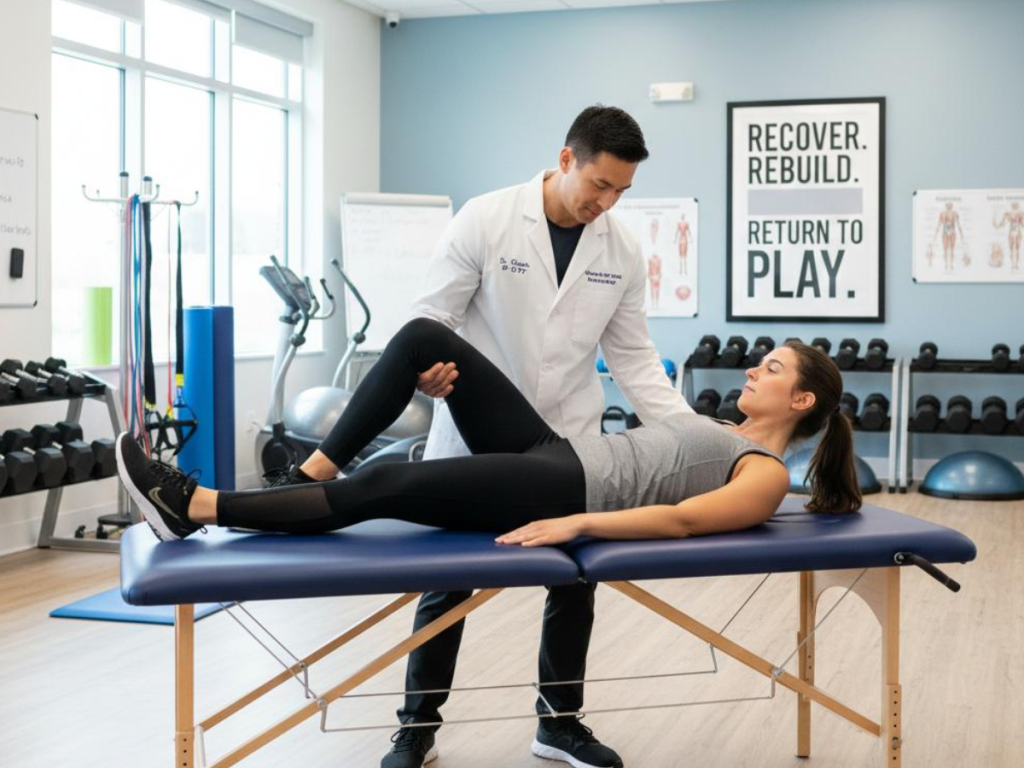
Return to Sport in Stages
One of the most important parts of injury recovery is returning to sport gradually.
Being able to walk without pain does not necessarily mean you are ready to run. Being able to run does not automatically mean you are ready to sprint, jump, change direction, or compete.
A gradual return may look like:
Stage 1: Everyday movement
You can perform normal daily activities with improved comfort and control.
Stage 2: Basic exercise
You begin rebuilding strength, mobility, balance, and general fitness.
Stage 3: Sport-related movement
You introduce movements that resemble the demands of your sport, such as running, jumping, lifting, or changing direction.
Stage 4: Higher-intensity training
You gradually increase speed, resistance, volume, or intensity.
Stage 5: Return to sport
You gradually return to normal training and competition when your physical function, strength, movement, and symptoms indicate that you are ready.
The exact progression depends on the injury. Some athletes may move through these stages quickly, while others require a longer rehabilitation period.
A structured return is preferable to going directly from rest to full training. Sports injury rehabilitation commonly includes restoring flexibility, strength, endurance, and sport-specific function before full return.
Address the Cause, Not Just the Symptoms
Recovery should also consider why the injury happened.
A sports injury may be linked to several factors, including a sudden increase in training, insufficient recovery, reduced strength, limited mobility, poor movement habits, previous injuries, or repeated stress.
If you don’t address contributing factors, they may increase the risk of recurring problems after you resume training.
Physical therapy can help identify areas that need attention and build them into your rehabilitation program. This may involve strength work, movement training, changes to exercise technique, or adjustments to how quickly you increase training demands.
Prevention does not mean injuries can always be avoided. It means reducing manageable risk factors and making sure your body is prepared for the activities you ask it to perform.
When Should You See a Physical Therapist?
You don’t have to wait until an injury becomes severe to seek professional help.
Consider an assessment if pain continues after an injury, your movement is restricted, swelling does not settle, the affected joint feels unstable, or you cannot return to normal activities.
You should also seek appropriate medical care for serious injuries, significant trauma, suspected fractures, severe swelling, major loss of function, or symptoms that are worsening rather than improving.
Early assessment can clarify the problem and guide your recovery. Instead of repeatedly resting, returning to activity, and experiencing the same pain, you can follow a structured plan based on your condition.
Take a Measured Approach to Injury Recovery
Effective injury recovery is not about getting back to sport as quickly as possible. It is about getting back safely and being prepared for the demands of your normal activity.
Physical therapy can support this process by assessing the injury, restoring movement, rebuilding strength, improving control, and gradually reintroducing sport-specific activity.
Most importantly, recovery should be based on how your body is performing, not an arbitrary deadline. If you are dealing with a sports injury in Bangkok and need professional guidance, Aspire Physio Bangkok can help you take the next step toward a safe and structured return to activity.
Begin Your Injury Recovery
Call us: 080-188-4114
Visit us: Jasmine Building, 2nd Fl, Sukhumvit Soi 23, Asoke
Website: www.physiobangkok.com
Instagram: @physiobangkok
Facebook: facebook.com/physiobangkok
If a sports injury affects your movement or keeps you from your usual activities, a physical therapy assessment can help determine the right rehabilitation approach for your injury, needs, and recovery goals.
