
Pain is often one of the clearest signs of an injury, so it is natural to feel that recovery is complete once the pain has settled. But pain is only one part of recovery.
You may feel comfortable walking but still have reduced strength after a leg injury. You may be able to use your shoulder for everyday tasks but find lifting difficult. You may feel fine during normal activities but struggle when you return to running, sports, or physically demanding work.
This does not mean that every injury requires lengthy rehabilitation. The amount of rehabilitation needed depends on the type and severity of the injury, the treatment received, and the activities you need to return to.
The important point is that rehabilitation after injury should look beyond pain when there are still problems with movement, strength, or function.
Why Feeling Better Does Not Always Mean Full Recovery
Pain can improve before the injured area has returned to its previous level of function.
After an injury, you may reduce your activity because certain movements are uncomfortable. This can affect strength and movement while the area recovers. Some people may also change how they move to avoid putting stress on the injured area.
As symptoms improve, these limitations may become less obvious during everyday activities. They can become more noticeable when the physical demand increases.
For example, walking around the house may be easy after an ankle injury, while running or changing direction is still difficult. A person recovering from a shoulder injury may be able to dress and work at a desk but struggle to lift or reach overhead.
This is why recovery is not measured by pain alone.
What Rehabilitation May Need to Address
The focus of rehabilitation depends on the injury and the person’s needs. A physiotherapy assessment may consider movement, strength, mobility, balance, and how well the injured area performs during relevant activities.
Treatment may include exercises or activity changes aimed at improving:
- Joint or muscle movement
- Strength
- Balance
- Coordination
- Everyday movement
- Ability to tolerate physical activity
- Work-related tasks
- Exercise or sports activities
Not every person needs all of these. A person with a minor injury that is recovering normally may need little or no formal rehabilitation. Someone with a more significant injury may need a longer period of guided recovery.
The plan should match the injury rather than follow a standard program.
Strength Can Take Time to Return
Reduced activity can contribute to weakness, particularly when an injury has limited normal use of a muscle or joint.
This is one reason exercise can be an important part of rehabilitation. Exercises can start at a level that is appropriate for the injury and progress as strength and tolerance improve.
For example, someone recovering from a lower-limb injury may begin with basic movements before progressing to exercises that place greater demands on the leg. Someone recovering from an upper-limb injury may gradually work toward lifting, pushing, pulling, or reaching tasks.
The goal is not simply to make exercises harder. The exercises should help prepare the injured area for the activities the person needs to perform.
Physiotherapy rehabilitation commonly includes progressive movement and strengthening, with the specific exercises depending on the injury and stage of recovery.
Movement May Still Need Attention
An injury can also affect how comfortably and normally a joint or body part moves.
For some people, stiffness remains after pain has improved. Others may have difficulty using the injured area through its normal range of movement.
Restoring movement can be an important part of rehabilitation, but the appropriate exercises depend on the injury. Someone recovering from surgery, a fracture, or a significant soft-tissue injury may have specific restrictions that need to be followed.
This is why copying exercises from a general online program is not always appropriate.
A physiotherapist can assess the person’s current movement and determine what needs to be addressed.
Everyday Activity and Higher-Level Activity Are Different
Being able to complete normal daily activities does not necessarily mean that you are ready for more demanding activity.
Consider someone recovering from an ankle injury. They may be able to walk normally but still have difficulty with running, jumping, or changing direction.
The same applies to work. Someone may be comfortable sitting at a desk but not yet ready for a job that requires repeated lifting, climbing, carrying, or other physical tasks.
The physical demands of the activity should therefore be considered when deciding whether recovery is complete.
Rehabilitation guidance for lower- and upper-limb injuries commonly considers strength, range of movement, and the person’s ability to perform relevant activities before returning to more demanding work or sport.
Returning to Activity Should Be Gradual
One common mistake after an injury is increasing activity too quickly because the pain has improved.
If the injured area has not yet regained enough strength or tolerance, suddenly returning to a high level of activity can place more demand on it than it is ready to handle.
A gradual return gives the body time to adjust.
For example, someone returning to running may progress from walking to light jogging and then to running. Someone returning to strength training may begin with lighter loads before gradually increasing the demands.
The exact progression depends on the injury. There is no universal timetable for returning to exercise or sport. Current rehabilitation guidance recommends gradually rebuilding activity and paying attention to changes in symptoms and function.
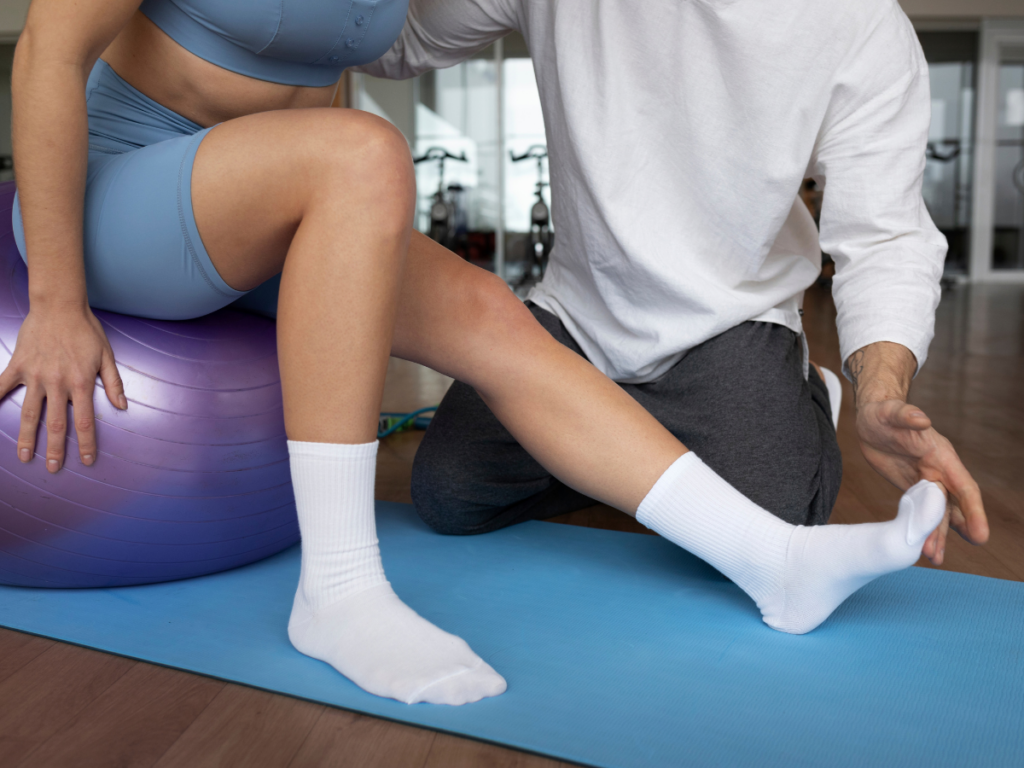
Pain Is Not the Only Sign to Watch
Pain remains useful information during recovery, but it should be considered alongside other symptoms and changes in function.
Mild discomfort may occur during some stages of rehabilitation, depending on the injury and the activity. However, sharp or increasing pain, renewed swelling, loss of movement, or reduced strength are signs that the activity may need to be reduced or reviewed.
If symptoms are getting worse rather than gradually improving, it is important to seek appropriate medical advice.
You should not assume that pushing through significant pain will make the injury recover faster.
How Do You Know When Rehabilitation Is Complete?
There is no single test that applies to every injury.
Instead, recovery is usually considered in relation to the person’s normal activities and goals.
Depending on the injury, useful signs may include:
- Normal or substantially improved movement
- Appropriate strength
- Ability to perform everyday activities
- Ability to tolerate gradually increasing activity
- Good control of the injured area
- Little or no problematic pain or swelling
- Ability to perform the movements required for work, exercise, or sport
For example, returning to a desk job may require less physical capacity than returning to a physically demanding job. Returning to recreational walking is also different from returning to competitive sport.
This is why being pain-free is not always enough to determine whether someone is ready for a specific activity.
Rehabilitation Should Match Your Goal
Your rehabilitation needs should reflect what you want to return to.
If your main goal is normal daily movement, rehabilitation may focus on restoring comfortable movement and strength for those activities.
If you need to return to physical work, your program may need to gradually prepare you for lifting, carrying, standing, climbing, or other job-specific tasks.
If you want to return to sport, later stages may include movements that are specific to that sport. Depending on the activity, this can include running, jumping, landing, changing direction, or other movements.
The same injury can therefore require different rehabilitation goals for different people.
A physiotherapist can help identify what is limiting your recovery and determine how to progress activity safely.
What If the Pain Comes Back?
Some changes in symptoms can happen when activity increases. That does not automatically mean the injury has been damaged again.
However, a clear increase in pain, swelling, weakness, or loss of movement should not be ignored. If symptoms repeatedly increase as you progress, the activity level may need to be adjusted, and the injury reassessed.
Current rehabilitation guidance recommends monitoring symptoms while gradually increasing activity rather than making a sudden return to full activity.
If you are uncertain about whether a symptom is expected, speak with a qualified healthcare professional.
When Should You Consider Physiotherapy?
You may want professional guidance if your recovery has stalled or you are having difficulty returning to normal activity.
This may include:
- Ongoing weakness
- Limited movement
- Difficulty returning to work
- Problems with balance or control
- Pain that returns as activity increases
- Difficulty returning to exercise or sport
- Uncertainty about how much activity is appropriate
- Reduced confidence using the injured area
Physiotherapy can help assess these problems and develop a rehabilitation plan based on the injury and your activity goals. Physiotherapy rehabilitation commonly focuses on restoring movement, strength, mobility, and independence following injury or surgery.
Recovery Is More Than Pain Relief
Pain relief is an important part of recovery, but it does not always mark the end of rehabilitation.
If the injured area still lacks strength, movement, control, or the ability to handle your normal activities, there may be more work to do.
Rehabilitation after injury should therefore be based on the whole recovery process rather than pain alone. The goal is to help you regain the physical abilities needed for your everyday life, work, exercise, or sport.
At Aspire Physio Bangkok, rehabilitation can be tailored to your injury, current abilities, and recovery goals. If you are feeling better but are not yet able to use the injured area as you did before, a physiotherapy assessment can help determine what still needs attention.
Pain may be gone, but you may still need to rebuild strength, movement, or function before returning to more demanding activities.
Get Support With Your Recovery
Call us: 080-188-4114
Visit us: Jasmine Building, 2nd Fl, Sukhumvit Soi 23, Asoke
Website: www.physiobangkok.com
Instagram: @physiobangkok
Facebook: facebook.com/physiobangkok
Pain relief is an important part of recovery, but when an injury has affected strength, movement, or function, those areas may still need rehabilitation before you return to higher-demand activities.